
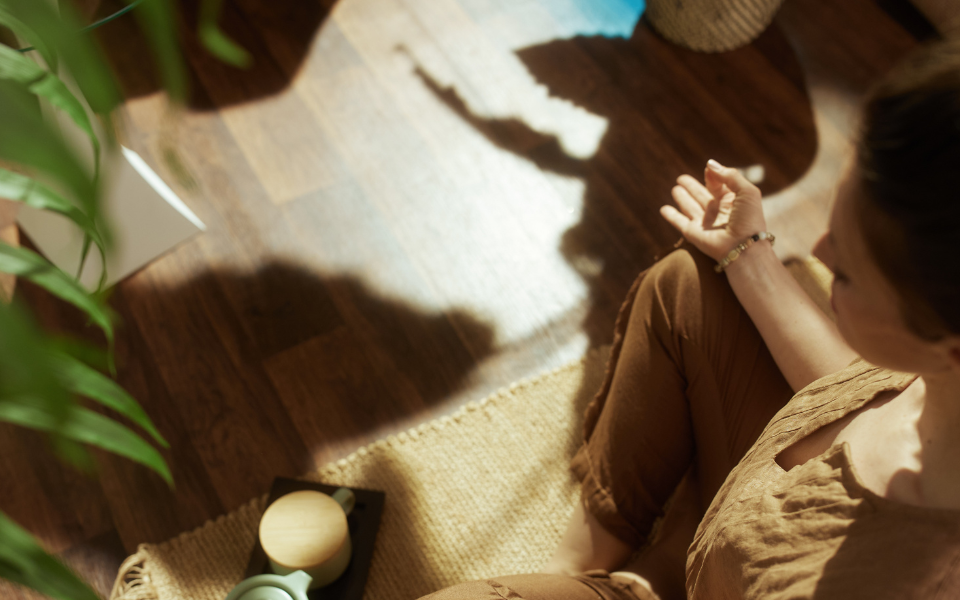
For much of my life, I never thought very much about the soul.
As a nurse, I was trained to understand the human body. I learned physiology, psychology, pathology, and the science of healing. I learned to trust evidence, to ask good questions, and to care for people in ways that were grounded in research and experience. That foundation has never left me, and I remain deeply grateful for it.
Yet somewhere along the way, I began encountering questions that science, at least on its own, couldn’t fully answer. Looking back, I realize they weren’t simply questions about the soul. They were questions about the inner journey every human being eventually finds themselves on.
I met people who were physically healthy and yet carried an ache they couldn’t explain. I sat with others whose lives looked successful from the outside but who quietly confessed that something essential felt missing. Some were overwhelmed by anxiety or burnout. Others had achieved everything they thought they wanted and still felt strangely empty.
Eventually, I found myself among them.
In 2012, I stood on the summit of Mount Kilimanjaro. It should have been one of the happiest moments of my life. I had a wonderful family, good health, and every reason to feel grateful. Instead, I remember standing there wondering why I felt so profoundly empty.
Looking back now, I don’t think I was simply unhappy.
I think something much deeper was asking for my attention.
That moment became the beginning of the questions that have quietly shaped the last decade of my life.
What is it within us that longs for self-actualization and becoming more fully ourselves? What explains why an acorn grows into an oak tree and not another type of tree? What is it that withdraws its energy from things that aren’t meant for us?
I didn’t set out looking for the soul; I set out with a hunger to live more fully, love more freely and contribute more authentically.
I didn’t know how to find the answers, and meditation was my first doorway into the inner journey. Then came mindfulness, the Enneagram, neuroscience, nervous system regulation, and years of sitting with people who were searching for greater meaning, deeper authenticity, and a way to feel more at home within themselves.
As my understanding grew, I found myself returning again and again to a single word.
Soul.
Not because I had become more religious; in fact, I have never belonged to any particular religious tradition and view myself among the growing number of people who are spiritual but not religious.
Rather, I needed language for something I kept witnessing in my own life and in the lives of the people I coached.
Science was helping me understand how transformation happens in the brain, body, and nervous system. The language of the soul helped me understand why we long for that transformation in the first place.
That distinction changed everything.
What I Mean When I Say “Soul”
Whenever I use the word soul, I know it carries different meanings for different people.
Some immediately think of religion, while others feel uncomfortable with the word altogether.
I have heard from many who have had profound spiritual experiences that leave little doubt in their minds that something exists beyond what we can measure. Before I retired from nursing, I worked as a palliative care clinical specialist. It was my work with people at the end of life that gave me glimmers of something that my scientifically trained mind couldn’t explain.
I’ve come to believe that the soul is the deepest expression of who we are.
It is that quiet place within us that recognizes truth before our minds can explain it. It is the part of us that longs for beauty, meaning, compassion, forgiveness, authenticity, and growth. It is what continues calling us forward long after we’ve become comfortable living according to old habits, familiar identities, or the expectations of others.
The soul, as I understand it, isn’t separate from our humanity.
It lives through it.
One image has stayed with me for years.
A turtle carries a shell that protects it and gives it structure. Without the shell, it couldn’t survive. Yet we would never mistake the shell for the turtle itself.
I wonder if much of our lives unfolds in a similar way.
Our personality, our conditioning, our achievements, our fears, our roles, and even the ways we’ve learned to protect ourselves are all part of being human. They help us navigate the world. They aren’t mistakes.
But I don’t believe they are the deepest part of us. They are the shell.
The soul is the life quietly living within it. Perhaps much of the inner journey is simply learning to care for the shell without forgetting the life it was created to protect.
The tragedy isn’t that we have a shell. The tragedy is when we spend so much of our lives strengthening the shell that we forget to become acquainted with the life it was meant to protect.
Where I Believe Science and Soul Meet
One of the reasons I’ve become so passionate about integrating science and soul is that I no longer believe they are competing ways of understanding ourselves.
I believe they are answering different questions.
Science has taught us extraordinary things about the human brain. It has shown us how chronic stress changes our nervous system, how trauma shapes our patterns of protection, and how meditation literally changes the structure and function of the brain. It has helped us understand neuroplasticity and given us remarkable hope that healing remains possible throughout our lives.
I find all of that deeply reassuring.
But over the years, I’ve also come to realize that science doesn’t fully answer another question that seems equally important.
Why do we long for authenticity?
Why does success sometimes leave us feeling empty?
Why do so many people, despite achieving what they once wanted, quietly whisper, “I don’t feel like myself anymore”?
I’ve come to believe these aren’t separate questions. They are different expressions of the same human longing to come home to ourselves.
For me, this is where the language of the soul becomes invaluable.
Not because it replaces science, but because it gives language to dimensions of being human that science was never intended to explain.
What Stress Taught Me
Ironically, one of the greatest teachers in my life has been stress.
For years, I taught stress management as a meditation teacher, believing that stress was primarily something we needed to regulate. Then life invited me into a much deeper understanding.
As I cared for my aging parents, my own stress bucket gradually overflowed. I developed frightening neuroplastic symptoms that affected nearly every aspect of my life. Looking back, I can see that my nervous system had become profoundly dysregulated.
Science helped me understand what was happening in my body, but another realization emerged alongside it.
I hadn’t only become disconnected from a regulated nervous system. I had become disconnected from myself. Looking back, I think that is one of the deepest consequences of chronic stress. It doesn’t simply dysregulate the body. It quietly pulls us away from the relationship we have with ourselves.
That insight changed the way I understood healing.
Today, I believe chronic stress doesn’t simply affect our biology. It also has the capacity to obscure our relationship with ourselves. We become so busy surviving, achieving, pleasing, or coping that we gradually lose touch with the deeper wisdom that has quietly been guiding us all along.
This is why I no longer see the relationship we have with ourselves as separate from the soul.
In many ways, I believe it is through that relationship that the soul becomes known.
The soul is not another part of us hidden somewhere deep inside; it’s the deepest dimension of ourselves, continually inviting that relationship to grow.
When our relationship with ourselves becomes more conscious, through meditation, compassion, honest reflection, and courageous living, we don’t create the soul; we simply become more available to hear it.
Coming Home to Ourselves
Over the years, I’ve watched people come to me because they wanted to reduce stress, sleep better, understand their personality, or learn to meditate. Very few arrived saying they wanted to begin an inner journey to connect with their soul or cultivate a healthier relationship with themselves. Yet almost without exception, that’s where the work led. Stress was the doorway. Coming home to themselves became the journey.
Over time, I began noticing that this journey wasn’t random. Although every person’s story was unique, the path often unfolded in similar ways. That realization eventually became the foundation for what I now call The Four Keys to Inner Peace—a practical framework for cultivating a healthier relationship with ourselves through both science and soul.
As they learned to regulate their nervous systems, understand their patterns, soften their self-judgment, and listen more deeply to their own lives, something remarkable happened.
They became more present, more compassionate, and more authentic, not only with themselves, but with the people they loved.
This is why I don’t believe cultivating a relationship with ourselves is selfish.
It’s the very thing that allows us to love more freely, respond more wisely, and contribute more authentically to the world.
Living the Question
Do I know exactly what the soul is?
No, and perhaps surprisingly, I no longer feel the need to.
Some questions aren’t meant to be solved as much as they are meant to be lived.
What I do know is that every time I’ve ignored that quiet inner knowing, my life has gradually become smaller.
Every time I’ve trusted it, even when it led me somewhere uncomfortable, my life has become more honest, more peaceful, more meaningful, and more fully my own.
Perhaps that is all the soul has ever been asking of us.
Not that we become someone else, but that we have the courage to become more fully ourselves.
And perhaps that is what the inner journey has been inviting us toward all along—not perfection, but a deeper relationship with ourselves. One where science helps us understand how we change, and the soul reminds us what we’re changing toward.
If you feel called to share, our community would love to hear from you in the comments below.


Leave A Comment