
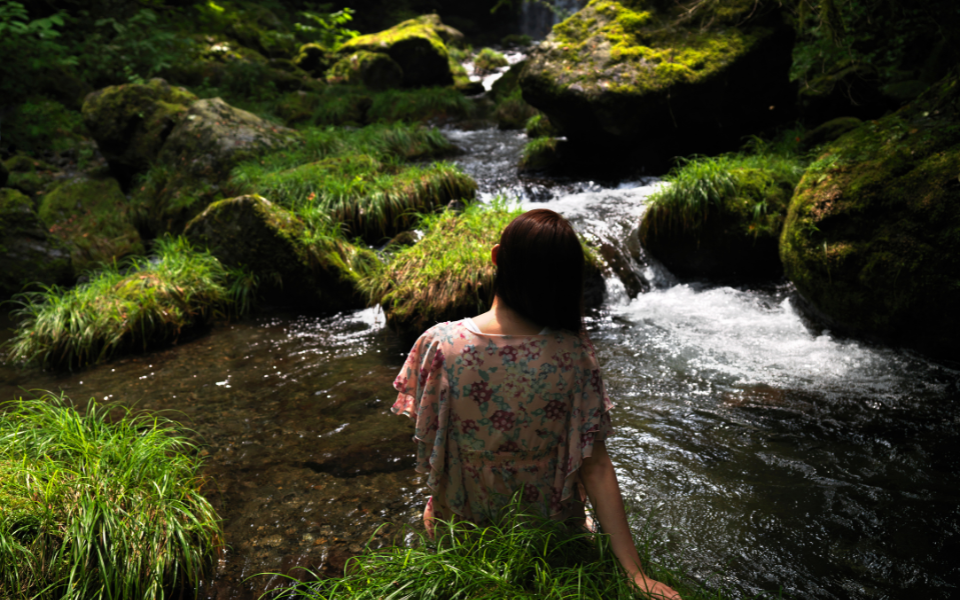
We spend so much of our lives trying to improve our relationships with others, but far fewer of us pause to consider the most important relationship of all: the relationship we have with ourselves.
This relationship quietly shapes everything.
Our health, our relationships, and our sense of purpose are all influenced by the quality of our relationship with ourselves.
When this relationship is strong, life begins to feel steadier, more aligned, and more meaningful.
When it is strained or neglected, even a life that looks good on the outside can begin to feel overwhelming, disconnected, or quietly unfulfilling.
Most of us have never been taught how to build this relationship.
The Quiet Strain of Losing Connection With Yourself
For many years, I would not have described myself as disconnected from myself. I would have said I was responsible, caring, and capable. I showed up. I adapted. I supported the people I loved. I did what was expected of me, and I did it well.
From the outside, my life was full.
Over time, my body began to carry what I would not name. Tension headaches. Anxiety humming beneath the surface. Burnout. A dysregulated nervous system. And a stable marriage that felt like we were roommates.
We all know that life is inherently stressful and relationships are challenging. There are seasons of pressure, responsibility, growth, and loss. Stress itself, though, is not the problem.
What I had never been taught was how to develop a steady, compassionate relationship with myself within the reality of that stress. I knew how to function. I knew how to achieve. I knew how to care for others. I did not know how to cultivate a strong inner foundation.
As a nurse, I paid attention to the symptoms. Still, I did not question whether the relationship I had with myself was contributing to the struggles in my health, my relationships, and the soul hunger that arose when my life lacked meaning and purpose. I explore this more fully in What is Soul Hunger? Understanding the Deeper Longings Within You, if that experience resonates with you.
Why So Many People Feel Disconnected From Themselves
Years later, as I began sitting with people in their twenties, thirties, forties, and beyond, I recognized the same quiet strain in different forms that I now call hidden stressors — deeper forces that quietly create inner stress and disconnection.
I consistently heard thoughtful, capable people say:
- “I don’t know who I am.”
- “feel like I’m wearing a mask.”
- “My life looks good, but something is missing.”
- “It feels too late to change.”
- “I don’t have the tools.”
- “For some reason, I put myself last.”
While people’s ages, gender, culture, and spiritual beliefs varied, the underlying pattern was consistent: a strained or underdeveloped relationship with themselves.
We call it burnout. Anxiety. Depression. Stress eating. Relational conflict. Existential crisis. Sometimes we call it a dark night of the soul.
But underneath many of these experiences is something far more foundational: a steady, compassionate relationship with ourselves has never been intentionally developed.
We have been taught to perform, to adapt, to achieve, to cope. We have not been taught how to regulate stress, how to listen inwardly with compassion, how to understand the personality patterns that quietly drive our behaviour, or how to live in alignment with our own voice.
So we begin to seek externally what can only be found internally. We change jobs, pursue new relationships, and often struggle with chronic or unexplained health issues.
It Is Not Selfish to Grow Your Relationship with Yourself
If I could speak to my younger self, I would not tell her to accomplish more. I would not tell her to be less sensitive, more efficient or more self-sacrificing.
I would tell her this:
Getting to know yourself and tending to your inner life is not selfish. It is not indulgent. It is not a distraction from your relationships, and it does not mean that you are not a ‘good woman’.
It is the foundation of living with vitality, connection and making meaningful contributions.
Without a steady relationship with yourself, love can turn into over-functioning. Responsibility can turn into self-abandonment. Peacekeeping can become self-erasure. Purpose can quietly become performance.
What I now understand with clarity is this: the quality of the relationship we have with ourselves shapes our health, our relationships, and our sense of purpose. When that relationship is strained or ignored, even a life that looks good on paper can begin to feel fragmented.
How to Build a Strong Relationship With Yourself
What begins to change our lives is not a dramatic outer shift. It’s learning to sit still long enough to notice what’s happening inside us.
I learned that meditation, at first, was not a spiritual quest. It begins with survival and enabling us to feel safe enough in our own bodies to listen. As our nervous system becomes more resilient, we can begin to see our personality patterns with more compassion.
We learn that being stuck in survival mode holds us back from the life we want to live.
Over time, I began to see that this wasn’t about fixing one part of myself. It was about learning how to integrate all parts of myself and relate to myself in a new way.
Lasting inner change happens when we integrate our body, heart, mind, and soul through cultivating what I call the 4 Keys to Inner Peace. Through self-regulation, self-love, self-discovery, and self-expression, we don’t just manage stress, but we discover and become more fully ourselves.
When Your Relationship with Yourself Becomes Your Anchor
This work is not about fixing what is broken or focusing on what is wrong; it’s about developing a steady, compassionate relationship with yourself and integrating what has been fragmented.
Because when that relationship becomes strong, something begins to reorganize.
Not because life suddenly becomes easier, but because you are no longer living it disconnected from yourself.
Health begins to stabilize. Reactivity softens. Boundaries become clearer. Purpose emerges more naturally.
You stop searching for peace and clarity as if they exist somewhere outside of you.
You begin to live from them.
If you feel called to explore this work more deeply, I offer one-on-one mindfulness coaching. I would be honoured to walk alongside you.
Other articles that may resonate with you:


Leave A Comment